Translate

Showing posts with label Useful sites. Show all posts

Wednesday, September 14, 2016

Back to School Blog Party


This post is for Elizabeth O’Neal’s Back to School BlogParty. The premise is a genealogy school and what our students need to learn.  Be sure to check into the Blog Party site throughout the month to get some helpful hints.

This topic is timely because I lead a special interest group for beginning genealogists for Indian River Genealogical Society.  We meet September through May so I’m preparing for our new season.

So… What do my group attendees need to know?


Cite Sources
Always document sources – even casual sources.  If you got information from cousin Edna, note that. Information from family interviews may not always be accurate, but we need to know where it came from. If a fact is from your own personal knowledge, note that, too. As research continues, sources get more verifiable and concrete. Sometimes it is important to know where misinformation comes from.

Question Everything
Even “official” documents may contain misinformation. The information on a death certificate, for example, is only as accurate as the knowledge of the person giving it. A young man may have lied about his age when enlisting in the military. A young woman may have fudged her age when applying for a marriage license.   Census records are often filled with misspellings, and erroneous information.

Don’t rely on one single document as absolute proof.  Verify! Verify! Verify!

Make Use of Free Resources
Subscription sites are great but there is a great deal of information available at no charge
and so many others

Continuing Education
Webinars
            LegacyFamilyTreeWebinars (free)           
Free weekly webinars.  Each webinar is available to view at no charge for one week following the live presentation.  Buying a subscription gives unlimited access to all previous webinars and the syllabus for each one. (more than 300 webinars)
            FamilySearch Classes and Webinars (free)
            AncestryAcademy (membership required)
            GeneaWebnarsCalendar – a listing of upcoming webinars

            Blogs
Read blogs by professional and amateur bloggers – especially those who are doing research similar to yours.              
Geneabloggers.com – a wealth of blogs and blogging resources


But most of all, they tell me what they need to know so that they can make progress along their genealogy journey.


Tuesday, August 9, 2016

Chronicling America: Newspapers – Part two


Chronicling America is FREE and easy to use. I’m not an expert user, but if you haven’t visited this site, you may find this post helpful.

Chronicling America website is the result of the NationalDigital Newspaper Project sponsored jointly by the National Endowment for the Humanities and The Library of Congress. More information is available on the site.

The home screen has three tabs on the left of the screen and on the right is the button to see the entire 1690 to present directory of newspapers.


Search Pages
This tab allows you to search papers from a specific state or from all states. Select the range of years desired. Type in the name or word to search for. 

 The image below shows some of the results of my search in Minnesota papers for the surname Muccio from the years 1890 – 1922.


Red highlights the occurrences of the name. Clicking on a page enlarges it and provides tools for zooming in and out; and viewing other pages of the same issue.

Advanced Search
Gives many options for making your search more specific as shown below.


All Digitized Newspapers 1836-1922
Allows you to select papers from a specific state, those aimed at a specific ethnicity, and/or printed in a specific language.


NOTE:  
 The above searches look only at those papers that have been digitized.  There are more than 11 million searchable pages at this time.  More are being added as the digitizing process goes on.


Search U.S. Newspaper Directory, 1690 – Present
The directory lists all papers from 1690 including those that have not yet been digitized.  You can browse by newspaper title or select state, county and city and years of publication.
 The image below shows a partial list of papers published in Cincinnati, Ohio. Clicking on the title will give more information about it.


One note of caution: It is easy to get completely wrapped up in reading these old newspapers.  They’re a snapshot of our ancestors’ lives.


Sunday, August 7, 2016

History of the Rest of Us: Newspapers – Part One


Volumes are written about individuals who had significant impact on our world. It is easy to learn about kings and conquerors and prominent scientists, inventors, politicians and business leaders.   But what about the rest of us?

What about the laborers, tradesmen, merchants, farmers, homemakers?  What were the local implications of historic events? How was everyday life affected by political realignments or troop movements, or inventions or even weather?

Newspapers.  That’s the best answer I’ve found so far.  Many of us scour newspapers for obituaries, birth and wedding announcement, etc. But don’t neglect to look at the entire paper.  You’ll find the entire spectrum of life.  More than just the hard news, there are cultural events, ads showing styles of clothing and home furnishings, opinion pages and even comics in some papers.

Our ancestors were more quickly affected by local events than by national events. The newspaper is where you’ll find the things that were shaping their everyday lives.  And don’t forget foreign language papers. I recently wrote about finding obituaries in Chicago’s Czech language paper.

Local historical societies generally retain newspaper archives.  If they’ve been microfilmed, you may be able to borrow them via inter-library loan to avoid travel expenses.

Chronicling America is a wonderful online resource for digitized newspapers from 1836 through 1922. (Copyright laws prohibit later issues.)  There is also a directory of US newspapers dating from 1690 to the present.


The best part is that these digitized papers are searchable!  Select the state and the range of years; then type in the surname that you’re looking for, and press the search button.  If that name appears, you’ll see it and the entire page on which it is mentioned.

My next post will be some detail about using Chronicling America.


Friday, August 5, 2016

Viewing Digitized Images on FamilySearch.org


The number of indexed digitized records at Familysearch.org is growing steadily. Just recently there was a huge volunteer indexing project.  But what if you don’t find what you’re looking for in the indexed records? Familysearch also has a vast collection of records that have been digitized but not yet indexed. 

 
The idea of browsing through these images can be intimidating but it need not be that way.  I am learning to enjoy browsing these records.


The title of this post is taken directly from a post byJames Tanner.  Apparently this is part one of a planned series.  James explains his topic clearly and thoroughly.  If you haven’t yet dived into this, you’ll want to follow his posts.


Sunday, July 10, 2016

1,000 Years of Border Changes

Every time I watch this short video, I have to pause it several times to study the nations that come and go over time. One thousand years of wars, royal marriages, and treaties made and broken.

Watch 1000 Years of European Borders Change In 3 Minutes


Wednesday, May 11, 2016

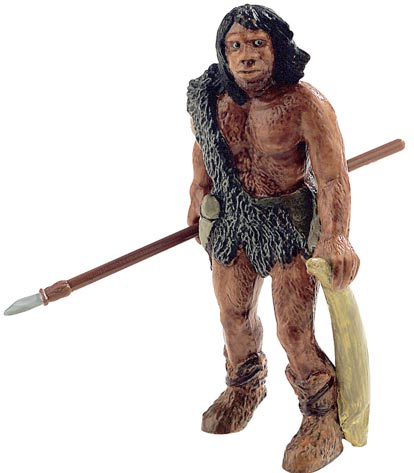
Celebrating My Neanderthal Heritage


According to 23andMe, my DNA test results show that I am 3% Neanderthal.


The common perception of Neanderthals is of a brutish, warlike culture. People with very rugged features and a posture that was not quite erect. Because they never developed a cohesive society, we think of them as wild and savage.

So why celebrate?

New research has taken a new look at their attributes and culture. They were creative, innovative, and loved music. They simply loved to fight – even among themselves. They were curious and inventive. They traveled. “Think of a tribe that was 100% ADHD and bipolar — no stability — complete and utter madness.”[1]

At the same time Neanderthals were in Europe, the group called “Modern Humans” were living in Africa. They were the original hunter-gatherers. Physically they were more modern looking than the Neanderthal and had a more erect posture. What they were not was creative and innovative. They were very stable. Change came very slowly to their society

Apparently it was the interbreeding between Modern Humans and Neanderthals that gave us the best of both cultures that we enjoy today.

This article: Surprising Way Your Neanderthal Genes May Affect You is what inspired this post.

The DRD4 7R gene has been thought for some time to have a Neanderthal origin. This gene is also known as the Wanderlust Gene or the Adventurer’s Gene. About 20% of people carry DRD4 7R. It has been tied to curiosity and restlessness[2]. People with this gene like to explore new places and things, to take risks, to create and innovate. I love it!

On the other hand, research has also linked this gene to ADHD and to bi-polar disorder. Well, you can’t have everything.

As for me, I’m curious about everything. I want to know how everything works and see what’s beyond the horizon. Am I inventive or innovative or creative? I’d like to think so.

So I am celebrating and loving my 3% Neanderthal.

Other References

Sunday, May 8, 2016

A couple of very useful blog posts


Since I have no new content of my own this week, here are links to some useful posts.

Here's some help for preserving our digitized photos and documents:
Future Proofing Digital Photos and Documents

Links to maps.  (I love maps)
5 Types of Maps Every Genealogist Should Know


Sunday, April 17, 2016

Relationship Charts – xCousin yRemoved


Relationships across generations can be confusing to beginning and experienced genealogists alike. If she is my second cousin twice removed, exactly how are we related? What is my relation to my first cousin’s great grandchildren.?  Verbal or written explanations can be convoluted, but here are links to a few charts that are both clear and simple.

Generation Names by Alvy Ray Smith


How Are We Related? An updated version of the Alice J. Ramsay chart from Crestleaf.com


Sunday, April 3, 2016

Passenger Lists – Beyond the “Majors”


Look beyond Ancestry.com and Familysearch.org for passenger and ship lists.


has transcribed more than 17,000 ship manifests. This group of volunteers has been working for 14 years to make these lists available online.  But it is more than just lists.

The Compass page has several categories of links to other sites with additional information including immigration and naturalization; maritime resources; arrivals at non-USA ports

This site is so much more than passenger lists. It is a wealth of general and cultural information from the late 19th and early 20th centuries to help flesh out the immigrant experience.
·       Vintage brochures
·       Steamship tickets and menus
·       Daily life aboard a ship
·       Traveling steerage – multiple articles on the steerage experience.

The articles about traveling in steerage gave me a small idea of what my own immigrant ancestors went through - I'm certain that they never saw anything like the elegant menus shown on this site.

It is definitely worth spending time on this site.


Monday, November 24, 2014

A Rose is a Rose is a Rose…………….???


But I’m beginning to wonder if all the Roses I’ve found are of the same family.  I’m up to my neck in Roses and trying to make sense of it all.

The Roses got from Maine, to New York state, to Wisconsin.  But how? Why?  Based on census and land records, I have some idea of when they moved west and then west again. 

I am truly grateful for online resources such as the Atlas of Historical CountyBoundaries at Chicago’s Newberry library. They have an interactive map that shows how county boundaries changed over time. New counties were formed from old ones; and larger counties swallowed up smaller ones. 

I’m also grateful for historians who so carefully logged people and events and published their findings, especially before states began official recordings of vital statistics.

No doubt it will all come together eventually, but I’m in overload just now.


Heading back to the library.

Sunday, November 18, 2012

Have I hit the jackpot?

 I may have found gates through a couple of the brick walls I’ve been pounding against.

My mother was able to pinpoint the town where her father lived, but it has been very frustrating trying to find where in Poland my other three grandparents originated.  

On my father’s side, I found towns that had many Dachtera families, but no information about my great grandfather Joseph.  Nor did I find his wife, Magdalena Kaszmarek.  Nor have I been able to identify my paternal grandmother’s father.

Likewise, on my mother’s side, I found no trace in Poland of my great grandfather, Michael Schipp or his wife Elizabeth whose last name is something like Jascinska.

It’s been VERY frustrating.

The Indian River Genealogical Society has several special interest groups based on ancestral countries of origin.  My first attendance at the Polish Interest Group blew my mind.

One of the regulars explained the Polish genealogy sites he’d found. What a gold mine!

 One of those sites led me to The Poznan Project which has indexed marriages in Poznan province. BINGO!!!!! I’ve located three marriages that may be my ancestors, and the towns where I hope to find my three mysteries.  I’ve ordered the LDS microfilms from those parishes where I hope to find ancestors.  My only problem now is patience.  It takes about 3 weeks from the date of the order before the films arrive at their destination.  So sometime in December, I’ll be able to see if I’ve hit paydirt.

If you’re doing Polish research, you might find these sites useful: